Showing posts with label lifestyle. Show all posts

Wednesday, June 13, 2012

Hypertension: Follow These 10 Commandments


  • I am your physician, your health care partner; you shall not fail to see me as scheduled.
  • You shall not fail to check your blood pressure regularly.
  • Honor yourself by keeping stress under control.
  • You shall achieve and maintain ideal body weight through regular exercise.
  • You shall not smoke.
  • You shall not drink more than two alcoholic drinks per day (1 ounce of alcohol).
  • You shall not drink more than two cups of coffee each day.
  • You shall not over-eat, especially salty and fatty food.
  • You shall not stop taking medication without your physician’s consent.
  • You shall spread the news and help stop the silent killer high blood pressure.
Hypertensive Patients: Check up hypertension

Read More: http://healthmad.com/mental-health/ten-commandments-for-hypertensive/

Saturday, March 5, 2011

Vitamin B-Complex: The Vitamin for Learning

All of us know by now that good nutrition results in better health, fewer infections, more endurance and stamina. We improve physically when our diet is adequate in vitamins, enzymes and minerals. Can diet have any effect on mental health and mental processes? Yes, of course! The nerves and the brain cells are affected by that same good diet that assures us of healthy skin, teeth, and eyes.

The process of learning is complex indeed. In spite of hundred of years of devoted and learned study, we still do not understand fully what biological, chemical, nervous, mental, or electrical processes go on in the human body when we are learning something. But something in the Vitamin B Complex appeared to make this process easier and faster.

Learning is, at least in part, conditioned by the presence or absence of a particular food constituent. There is a certain nutritional state of the nervous system which must be realized for the effective realization by the learner of the teaching one receives.

Child in glasses studying and learning
All public or private schools all over the world must aim to turn out a complete, mature, and self-sufficient personality to their students before going out in service in whatever choice of field they are in. They must not be concern only in instilling facts into their brains but with study, athletic and recreational facilities to develop them with.

Our apathy about diet problems and the food manufacturing companies must be blamed, whose advertisements convinced almost everybody that their food is everything it should be, when in fact they are doing a great disservice to the public; the white sugar and refined cereals and their products – worthless as food and potentially dangerous, for their assimilation by the body uses up precious stores of vitamins and minerals which are replaced by our diet.

We must have proteins, carbohydrates, and fats that we should eat fruits and vegetables that children should drink milk, and astonishing results could be obtained over a period of years, feeding, ample amounts of all supplements and vitamins.

We have the responsibility of keeping before others (men, women, and children) the facts that are not well-known about nutrition.

Read More: http://healthmad.com/nutrition/capability-to-learn-enhanced-more-by-thiamin/

Robbery in Nutrition: Avoid These Nutrient Thieves

Everyday, almost everybody around the world are using, eating or doing these (stuffs or usual lifestyle wants), listed hereunder and so there is an urgent need to restore the vitamins which we unknowingly remove from our bodies.

  • Smoking destroys Vitamin C.
  • Drinking alcoholic beverages drain much of the body’s Vitamin B.
  • Coffee uses some of the Vitamin B of our body.
  • A diet overcharged with artificial sweets cuts in on the B vitamins.
  • Chlorine in our drinking water destroys Vitamin E in our body.
  • Chlorine dioxide used in bread has the same result.
  • Rancid oil or fats in the diet destroys Vitamin E.
  • Inorganic iron compound destroys Vitamin E. This is the kind of iron given in cases of anemia. Sterility muscular dystrophy and coronary disease may result from Vitamin E deficiencies.
  • Raw fish robs thiamin.
Assorted
  • Chemical sterilizer, ethylene oxide, used in food industry, destroys B vitamins. The loss is between 11 to 47 percent.
  • Sodium sulphite destroys much of the body’s vitamin, and is mostly found in ground meat, such as hamburgers, pork sausages, chili meat, and cooked beef rounds.
  • Sleeping pills block the progress of carbohydrate metabolism and so add difficulty of the body’s absorption of thiamin.
  • Medicines for malaria destroy Vitamin B.
  • Penicillin, chloromycetin destroys Vitamin B.
  • Mineral oil, used as laxatives destroys Vitamins A, D, E and K.
  • Fluoride destroys the enzyme phosphates, upon which many vital processes in the body depend, including its handling of vitamins.

Read More: http://healthmad.com/nutrition/nutrient-thieves/

How Long Will You Live: Life Expectancy Quiz

This life expectancy quiz is typical questionnaires used by insurance companies. Of course it can’t be 100 percent accurate. But though exceptions exist (and barring sudden accidents), it is likely that your predicted life span may be somewhat in that range.

You will start with the number 74. So write down that number at the top of a sheet of paper.
  • If you are a male, subtract 2.
  • If a female, add 4.
  • If you live in an urban area of over 2 million people, subtract 2.
  • If living in a rural area with population under 70,000, add 2.
  • If any grandparents live to be 85, add 2.
  • If all grandparents live to be 85, add 2.
  • If all grandparents lived to be 80, add 6.
  • If either parent died of a stroke or heart attack before the age 50, subtract 4.
  • If any immediate relative (parent, brother, sister) under 50 has – or had – cancer or a heart condition or has diabetes since childhood subtract 3.
  • If you finished college, add 1.
  • If you live with a spouse or friend, add 5.
  • If you have graduated or professional degree, add 2 more.
  • If not, subtract 1 for every 10 years alone since age 25.
  • If your work behind desk, subtract 3.
  • If your work demands to be physical, add 3.
  • If you exercise 2 times a week, add 2.
  • If you sleep more than 10 hours per night, subtract 4.
  • If you are generally relaxed and easy going, add 3.
  • If you are generally unhappy most of the time, subtract 2.
  • If smoking a pack per day, subtract 7.
  • If smoking 2 packs per day, subtract 8.
  • If smoking half pack per day, subtract 3.
  • If drinking more than 1 ½ oz. of liquor per day, subtract 1.
  • If overweight by 30 – 50 pounds, subtract 4.
  • If overweight by 50 pounds or more, subtract 8.
  • If you are between 30 – 40, add 2.
  • If between 40 – 50 add 3,
  • If between 50 – 70 add 4,
  • If 70 add 5.
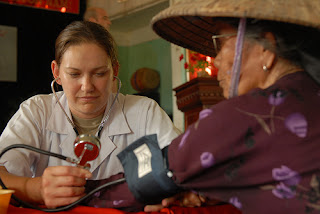
 Doctor Checking Up Patient in Urban AreaYour total score will be the estimated number of years you may live. But there is more. You are likely to live even longer if:
  • Your blood pressure is less than 130/75.
  • Cholesterol is less than 200.
  • Resting pulse rate is less than 60 beats per minute with no breathing problems, asthma or history of chronic illness.
  • Presently living with a pet and still work after age 62.
  • Light eater, do not skip breakfast and has social contact besides your spouse.

Read More: http://healthmad.com/conditions-and-diseases/how-long-will-you-live/

Monday, February 28, 2011

Do Slow-Motion People Have Advantages?

Most often in the slow-motion mode, Type “B” personalities are definitely unhooked.

They read slowly, eat slowly, speak slowly – and generally drive fast-forward people crazy! Slow-motion people are easy-going and rarely harried. They take time. They’re contemplative, steady-working, and not easily irritated.

I’m not saying that one type of personality is better than the other. The stuck, fast-forward people, without management, can drive themselves into an early grave. On the other hand, the stuck slow-motion people, without a little motivation, can bore themselves to death. Knowing which personality describes you is not as important as knowing your own tendencies and learning how to manage them.
Stress from Work - Woman have someone driving her crazy

People who meet me for the first time rarely think I’m a fast-forward person, but a closer evaluation of my behavior clearly shows that I am. After training, however, I’ve learned to manage myself relatively well.

This training has been well worth my time because my research shows that fast-forward people make up only 20 percent of the population, yet they account for 80 percent of the people who have heart disease.

Coronary heart disease is common in fast-forward people in their thirties or forties, while slow-motion people rarely experience heart trouble before age seventy. The life span of the average fast-forward person individual is fourteen years shorter than her or his slow-motion counterpart — fifty-nine years compare to seventy-three.
The Men in Black
Furthermore, a lot can be experienced and accomplished during those additional fourteen years. More than one survey has shown that a majority of the very top executives who are highly efficient and productive have more slow-motion characteristics than fast-forward. These people work out of a sense of purpose rather than compulsion. They enjoy their play time and set aside time for their loved ones. Most important, they know their worth apart from their work. They know they are worthy individuals because of who they are.

Sunday, February 27, 2011

How to Develop A Disciplined Lifestyle


Four key words that relate to new disciplined lifestyle are compulsive, consistent, focus, and discipline.
  • The first, however, is meant to remind that is important not to be compulsive about your progress.
  • Second, give attention to the consistency of your progress rather than the discrepancy between where you are and where you’d like to be.
  • Third, develop the ability to put on blinders and focus on what you want to improve.
  • Finally, start to learn the discipline it takes to stick with it.

Remember, a program of improvement is a slow process that requires patience. It is a brick-by-brick building process that has within the plans a stronger foundation and structure for a healthier, happier, and more productive life. Guard against your own natural impatience. Most of us have a tendency to be too hard on ourselves.
Woman thinking and visualize

Like any pianist, singer, writer, typist, teacher, actor, or golfer, we get better at anything we want to do by patiently practicing correctly. We need to discipline ourselves to practice consistently and patiently until we see the results we desire.

Let me summarize with the 3 D’s:
  • Desire – your goal or objective.
  • Discipline – consistently and patiently thinking, planning, and working toward your desire.
  • Delight – the feeling, experience, and excitement of achieving your desire.

Read More: http://socyberty.com/lifestyle-choices/the-disciplined-lifestyle/

Saturday, February 26, 2011

The Workaholic Disease: Stuck in Fast-Forward

The way a fast-forward person lives adds to the stress and strain he or she is already experiencing.

Being out of balance is not in itself destructive; but to the extent an individual cannot let go and return to a healthy balance, she or he is no longer in control.

People with fast-forward personalities eat, walk, and talk fast. They are restless and impatient, have trouble relaxing, and thrive on deadlines. Typically they are compulsive, competitive, and power-seeking. They are clock-watchers and time-binders. Fast-forward types will try to cram eight hours of work into two and then become agitated when the work isn’t completed – especially if someone else was expected to do it.
Fast-Forward Pace of Workaholic

They feel pressure even when there’s no need to. They burn a great deal of energy needlessly and have trouble unhooking. They are the high-rollers – big spenders – when it comes to energy use.
The Workaholics - Nothing can Stop them

About 5 a.m. in an airport rest room, I was at the sink washing my hands. At first I thought I was alone in the room, but I kept hearing a faint mumbling. Turning to look, I saw a pair of legs at the end of a long row of stalls. Listening more closely, I quickly realized that the gentleman in the stall was dictating a letter to his secretary!

Some people might call that an efficient use of time. I say it demonstrates a number of points about fast-forward personalities: the need to do more than one thing at a time, a tendency to have trouble letting go, and an inclination to be stuck in the fast-forward mode.

Read More: http://socyberty.com/advice/are-you-stuck-in-fast-forward/

Health as Dominoes - Improve Mind and Body

Just as our homes are in need of care and attention to keep them functioning and to bring out their fullest potential, we also need care and attention to keep functioning and to realize our fullest potential.

When you improve your mind, your body, or your environment, you create a cause-and-effect chain reaction that changes your life; when one of the major divisions in your life changes, so do the other two. It’s like a circle made up of dominoes. Tip one over – start at any section of the circle – and the others follow. Or touch one part of a hanging mobile; the whole mobile begins to move.

Dominoes like Health can Cause a Chain Reaction

Begin one good habit and observe how it affects the other areas of your life. Begin exercising regularly, for example, and see how you will begin to manage your fast forward attitudes and the stress that’s been plaguing you.
Balanced Life and Yoga

That’s the good thing about the three major areas (mind, body, and environment) – they are interdependent.

Perhaps this renewal of attitude and body will help reduce your craving for cigarettes, which will reduce your blood pressure, positively affect your diet and your weight, and contribute, to high energy. Overall, your attitude and your health will be much better. Any positive changes you make will probably contribute to your potential for play, work, worship, and love.

Enter the circle at any point – mind, body, or environment – and your efforts will have an immediate affect on the other areas of your life. Better yet, enter in and make improvements in each of the three areas, and you are sure to send the energy-draining and health-destroying dominoes tumbling. Each time you complete one of the action steps, you are investing in your God-given potential – your bright and exciting future.

Read More: http://authspot.com/thoughts/the-domino-effect/

Thursday, February 24, 2011

Progressive Relaxation: Learning to Relax


Work here! Work there! A lot of people, especially workaholic, forgot the time to relax. Relaxation is needed by everyone. It’s not for enjoyment only but refreshment that will keep your brain and body in shape. It is also best fit for dads who are working and even moms.

Here are techniques for relaxation, especially if you once used sugar as a sedative or food in general as a tranquilizer.

Progressive Relaxation

Lie on your back in a comfortable place: bed, sofa, or floor. Close your eyes. Inhale deeply. Release the air slowly. Repeat this cycle three more times. Now tense your leg muscles. Hold. Relax. Tense hip and abdomen muscles. Hold. Relax. Continue upward through every part of your body until you have worked upward to relax all the muscles of your face and scalp. 
Progressive Relaxation - Stress Free

This would be an excellent time to let your subconscious mind surface if you’ve been looking for a creative solution to a problem at work. Or you might simply want to drift off to sleep. Even if you only have time for a brief nap, you will awaken refreshed because you relaxed so completely.

Set Worry Limits

If you are a “worrier,” you may find yourself worrying throughout your day about maintaining your weight loss, problems at work, personal problems and staying on your recovery footpaths’. If this happens, deal with it somewhat like saying positive self-talk statements. Give yourself a ten-minute period once or twice a day when you can sit down and do a good job of worrying. When worries intrude during the day, jot them down and save them for your worry session, telling yourself, like Scarlett O’Hara, “I’ll think about that tomorrow.”

Business often develops a “worst case scenario” and a “best case scenario” when considering a new venture. Try imagining the worst that could happen, then the best that could happen. Reality will probably be somewhere in between. Then when it’s time to worry, try to use the time creatively. Don’t just go over and over the “what if. . .” worries but take the offensive and try to think of ways to handle the situation if the worst does happen. Writing a Plan B in your journal will free your mind of that worry.

Do Something Else

Psychologists call this “Competing Behavior,” but it’s really what our mothers did when they told us to “Go, do something else.” Sometimes it is important to take journals especially those who are plagued with repeating worries. Writing down journals can contribute insight and also provides a competing behavior – the act of writing gives them something else to do. Going out for a walk or a session of aerobic exercises can do the same thing if one’s schedule allows.

Read More: http://healthmad.com/mental-health/learn-to-relax/

Tuesday, February 22, 2011

Promoting Health: Evaluating Alternative Therapies


The growing interest in alternative therapies is not difficult to understand. People sometimes turn to alternative therapies after a negative or unsatisfying experience with the way modern health care system provides “care”. Medical practitioners often have a little time to spend with their patients, many of whom they barely know. Patients feel shuffled in and out of offices, hooked up to one instrument after another, and finally handed a huge bill. They often come away from an impersonal medical business feeling confused, not really heard, and even scared.

Into this environment comes and “alternative” – or way to approach health and healing that is personal and caring. Practitioners of alternative therapies spend lots of time going over every aspect of a patients life. They don’t rush from one appointment to the next and seem genuinely interested in each patient. Insurance might not cover the costs, but the charges seem reasonable and all that endless paperwork is eliminated. Unlike many of conventional medicine, alternative therapists don’t compare their practices to a war against a disease. Rather, they focus on building up each person in order to ward off diseases. In so doing, they focus on the person rather than the disease. Therefore, the turn to alternative therapies is partly a reaction against a system perceived as impersonal, financially driven, and lacking in humility. Certainly many within the conventional medicine are caring professionals focused on doing their best for their patients. But confidence in the system as a whole is decreasing, and people are becoming more open to considering alternatives.

Massage as Alternative Therapy
People should indeed pursue the therapies that are the most effective and affordable. They need not assume that conventional medicine is always the safest and most effective answer to curing human ills. But they must also be discerning.

Physical therapy, counseling, nutrition and massage are listed as alternative therapies used mostly by people with multiple body pains. Also most common are chiropractic, weight loss programs, acupuncture, relaxation therapy, mental imagery, hypnosis. Some of the therapies have much to offer patients and should be encouraged, some should be rejected completely and others fall somewhere in between.
  • Complimentary therapies - such as diet, exercise, stress reduction that address broader lifestyle issues.
  • Scientifically unproven therapies – such as many herbal remedies, with a foundation in established medical and scientific principles but for which very little scientific evidence exists.
  • Scientifically questionable therapies – such as homeopathy, based on principles that contradict well-established scientific principles or that cannot be easily verified.
  • Life energy therapies – such as therapeutic touch or “Reiki”, that assume the  existence of “life energy” that can be manipulated by a variety of techniques.
  • Quackery and Fraud – that have been shown to have no reasonable benefit but that are still promoted by committed adherents. Fraud can occur with any therapy but especially will alternative therapies because the usually lack adequate research and rely on patient testimonials and validation.
We need not accept or reject alternative therapies as a whole, but we can evaluate when therapy based on the category/categories to which it belongs. Complimentary therapies generally seem to play an important role in promoting health where as quackery should always be exposed and rejected. Decisions about scientifically unproven theories, therapists based on life and energy and scientifically questionable therapies will have to be made case by case with reliance on the best scientific evidence available.


Related Posts Plugin for WordPress, Blogger...