Showing posts with label heart. Show all posts

Friday, June 15, 2012

Noise Pollution: Society in More Stress

Three hundred years ago, actual noise as we know it was confined to natural events over which humans had no control. America sounded like wilderness – wolves howled, trees toppled, and water rushed over waterfalls and ran down mountain streams.

Today, surrounded by sounds difficult to escape – jetliners, motorcycles, snowmobiles, lawn mowers, chain saws, tractors, traffic, sirens, jack hammers, – we step inside our homes to be bombarded further by televisions, radios, electric razors, hair blowers, air conditioners, and even phones, At the office, it may mean another eight-plus hours of uninterrupted din. In our society, we move from one deafening environment to another.

We’re so accustomed to the clamor that we don’t even hear it, not really. People exposed to the same noises each day, especially loud ones, adapt so well that after an adjustment period, they don’t consciously “hear” it anymore.
Noise Pollution - World in Stress

Unfortunately, our “desensitizing” of noises doesn’t make them any less harmful. Even when we’re not aware of them, sounds – especially sudden ones – evoke a rapid, increased blood flow, raising the heart-rate and, ultimately, elevating blood pressure. This is the body’s method of responding to stress in what is called a stress reaction.

Researchers Dr. Ernest A. Peterson and Dr. Jeffrey S. Augenstein experimented with the effects of the noise. Two rhesus monkeys were selected for the test because their hearts and circulatory systems were “the closest [they] could get to humans.” The doctors subjected the monkeys to the same kinds of noises heard daily by the typical blue collar worker in America. At the end of three weeks, the animals’ blood pressure had jumped 43 percent.

What is a safe noise level? Although researchers aren’t yet sure, it is obvious that what many of us consider “normal” is not safe. Even people who believe they’re handling stress and the everyday pressures of life well aren’t as tension-free as they think they are.

Can you remember the “good old days” when the still, small voice within us used to be called “conscience” instead of “transistor radio”? Pursuing the sounds of silence will enhance your health.

Read More: http://healthmad.com/mental-health/how-noise-affects-your-stress-level

Monday, February 28, 2011

Do Slow-Motion People Have Advantages?

Most often in the slow-motion mode, Type “B” personalities are definitely unhooked.

They read slowly, eat slowly, speak slowly – and generally drive fast-forward people crazy! Slow-motion people are easy-going and rarely harried. They take time. They’re contemplative, steady-working, and not easily irritated.

I’m not saying that one type of personality is better than the other. The stuck, fast-forward people, without management, can drive themselves into an early grave. On the other hand, the stuck slow-motion people, without a little motivation, can bore themselves to death. Knowing which personality describes you is not as important as knowing your own tendencies and learning how to manage them.
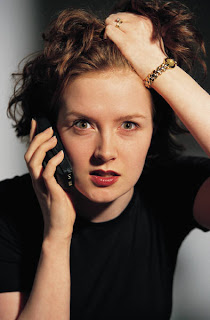
Stress from Work - Woman have someone driving her crazy

People who meet me for the first time rarely think I’m a fast-forward person, but a closer evaluation of my behavior clearly shows that I am. After training, however, I’ve learned to manage myself relatively well.

This training has been well worth my time because my research shows that fast-forward people make up only 20 percent of the population, yet they account for 80 percent of the people who have heart disease.

Coronary heart disease is common in fast-forward people in their thirties or forties, while slow-motion people rarely experience heart trouble before age seventy. The life span of the average fast-forward person individual is fourteen years shorter than her or his slow-motion counterpart — fifty-nine years compare to seventy-three.
The Men in Black
Furthermore, a lot can be experienced and accomplished during those additional fourteen years. More than one survey has shown that a majority of the very top executives who are highly efficient and productive have more slow-motion characteristics than fast-forward. These people work out of a sense of purpose rather than compulsion. They enjoy their play time and set aside time for their loved ones. Most important, they know their worth apart from their work. They know they are worthy individuals because of who they are.

Saturday, February 26, 2011

Mental Break - Regenerate Healthfully


Our society has become irreversibly noisy. We are rarely blessed with – or allow ourselves the luxury of – relative silence. When was the last time you relaxed by a fire to only the sound of a soft, comforting voice or gentle music?

By incorporating silence and relaxation into your day, you can control your environment and its effect on your life. Learn to spend time alone in restful, natural locations – the park, the mountains, or a wooded area. Create a relaxing environment at home. Turn off the TV. Pull the shades. You deserve a break.

Relaxation in Calm Environment - Wind Breeze
Relaxation helps give clarity of mind. It enhances our thinking, planning, creativity, and our ability to make decisions. People who regularly practice relaxation talk of sleeping better and of having more energy and better overall health. They say they’ve actually watched their performance at work and their sense of well-being improve. They do more in less time and with fewer mistakes.

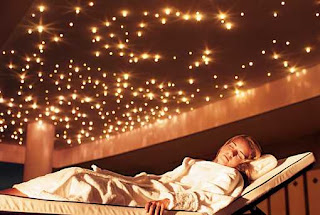
Sound Sleep as Relaxation
Taking time to relax gives us a mental break and turns off the harmful bodily effects of stress. It normalizes and tunes our bodies’ natural homeostatic or balancing mechanisms. It is vital to the body’s process of adapting and regenerating healthfully.

Read More: http://healthmad.com/mental-health/giving-your-mind-a-break/


Related Posts Plugin for WordPress, Blogger...