Showing posts with label energy. Show all posts

Thursday, March 3, 2011

State of Attention: Worry and Stress Combined

Imagine a stressful situation. It will, I hope, show how important it is to avoid the cause of internal imbalance and to release accumulated tensions inside the body.

You’ve gone camping with your family and have just spent the day backpacking into the mountains. It was a rigorous but fascinating journey. The wild flowers were in bloom, and you even walked behind a sparkling waterfall.

Now it’s evening, and the fire has died into a few glowing embers. Everyone’s asleep, but you’re not quite finished relishing the peacefulness of this beautiful day.

You decide to take a short walk under a clear, star-bright sky. Walking up the trail a bit, you smell pine and feel an evening breeze against your face. You’re relaxed and more content than you’ve been in years.

Then, suddenly, ahead of you to the right, you spot a dark figure in a grove of trees.

It’s a grizzly bear!
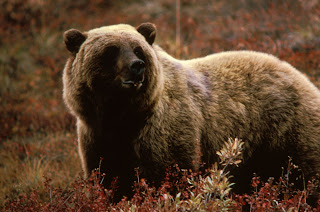
Wild Grizzly Bear Environment
Immediately an involuntary metabolic change occurs. A threat to your survival is perceived, and your body is instantly alarmed and alert. Without your even realizing it, your heart-rate, blood pressure, rate of breathing, blood flow, muscle tension, blood clotting agents, white blood cell count, and body metabolism increase dramatically.

Within six to eight seconds, your entire body is activated for one of the oldest, innate reactions of which the human body is capable – fight or flight. Your body naturally adapts to this new set of circumstances.

Without your conscious participation, your endocrine system releases thousands of full-strength hormones into the bloodstream, and your autonomic nervous system sends impulses filled with thousands of instructions to all parts of your body – and at tremendous speeds of 200-300 miles per hour.

Being of sound mind, you decide to run.

Woman in state of Shock - Animated
It doesn’t matter one bit whether there actually is a grizzly bear in those bushes or whether you just imagined one. Somewhere you’ve learned that bears can be hazardous to your health, and that knowledge along with the perceived threat to your survival, is enough to set off a whole chain of physical reactions.

Of course, the run back to camp releases some accumulated tension; that’s positive. But even after you get back to camp and relative safety, the tension isn’t over. You can’t get that grizzly bear out of your mind. You lie awake listening to every noise – the wind now sounds eerie as it whistles through the trees, and every crack of a branch is the grizzly bear coming to get you. Even as you’re snuggled safely into your warm sleeping bag, your vivid imagination races, remembering every gruesome bear story you’ve ever heard.

The familiar terminology for this type of imagination is worry, and as long as you keep worrying and replaying the incident in your mind, the alarm continues. Your body remains alert. Stress is prolonged as long as you harbor the thought of danger, Your body, including the brain cells, is unable to regenerate and regain its balance. Your system remains in a state of attention.

In this condition, you drain your own energy reserves, keep muscle attention mercilessly taut, and involve your brain, heart and liver in a complex chemical process that can push them to their highest capacity without relief.

This distress, whether from a real or imagined source, does two things: it sustains tensions and intense bodily changes, and it drains energy needlessly. These are tremendous demands on your body’s metabolism. When they are allowed to persist, imbalances like this sabotage your health.



All About Water: Source of Relief


Urine is an accurate indicator of the body’s current need for water; its color is the key. When urine is darker than a light yellow, the concentration of toxins is too high and the body needs more unpolluted water.

Our body is 70 percent liquid, so eight to twelve glasses of water a day really are crucial for our body and urinary system to function properly. Water replaces fluids lost to sweat, tearing eyes, running noses, and diarrhea. They help fight sore throats, allergies, fever, infection, constipation, and colds.

Woman Drinking Water
Water is a natural remedy for many common ills. How do you spell relief? W-A-T-E-R. Your best choice is filtered, naturally mineralized water.

To help you fully appreciate its importance, think of your body as a steam engine. It needs both fuel and fire to run; but without water, it can’t produce energy. It will overheat and could very well self-destruct. The body needs water; without it, the body cannot produce energy.

I’ve met thousands of people over the years as I travel, attend seminars and workshops, but rarely have I come across someone who drinks enough water. At work, keep a glass of cool water at your desk or work station to sip on at all times. A slice or two of lemon or lime adds a pleasant, mild taste that entices the taste buds.

Once you begin consuming sufficient water, you’ll be absolutely amazed at how much better you feel and how much more energy you have. Try it!


Monday, February 28, 2011

Fight or Flight Reaction: Tension Buildup

Stress’ common denominator is change. As long as we live, we will experience thousands of changes every day.

During any situation involving change, the body can create an enormous amount of pent up energy. As a consequence, a lot of wear and tear (stress) is expressed within. This causes an unnecessary drain on energy reserves.

Other, more obvious, circumstances cause us to react immediately and intensely, producing the fight or flight reaction. This response puts an extremely heavy demand on the body. Perceiving a serious threat, the body is put on red alert in order to make itself respond effectively. The stress producing this fight or flight syndrome is obvious, as the body reacts to a demand placed upon it..

Stress as Fight or Flight Reaction
In order to demonstrate how tension can build slowly and how this accumulation can affect the intensity of the fight or flight reaction, I’d like you to visualize a situation with me.

You are just returning from a pleasant and relaxing vacation. Having settled into your seat on the plane, you lean back to enjoy the memories of the recent days.

Suddenly, the captain’s voice over the intercom interrupts your dreamy thoughts: “We will be passing through the outer edges of a storm. There are reports of mild turbulence. To be on the safe side, please fasten your seat belts.”

The “Fasten Seat Belt” sign blinks on above your head, and a few minutes pass with the airplane bouncing you slightly.

Then you hear the intercom click again.

“The turbulence appears to be a little stronger than we originally anticipated,” says the captain, “so I’ll ask that you remain in your seats, keeping seat belts fastened, until further advised.”

US passenger plane flying
During the next few silent moments, the ride becomes quite choppy. Again, the intercom interrupts.

“This is your captain speaking. Place your trays and seats in a forward position. We are approaching the most turbulent area — Oh! Oh my God!”

The plane lurches forward, you’re thrown against the restraints of the seat belt, and people around you scream out. Suddenly, the entire cabin is quiet.

In a few minutes that seem like hours, the captain returns to the intercom. “Ladies and gentlemen, we are now past the worst of the turbulence. And let me apologize for that sudden outburst — I spilled a cup of hot coffee on my lap.”


Saturday, February 26, 2011

The Workaholic Disease: Stuck in Fast-Forward

The way a fast-forward person lives adds to the stress and strain he or she is already experiencing.

Being out of balance is not in itself destructive; but to the extent an individual cannot let go and return to a healthy balance, she or he is no longer in control.

People with fast-forward personalities eat, walk, and talk fast. They are restless and impatient, have trouble relaxing, and thrive on deadlines. Typically they are compulsive, competitive, and power-seeking. They are clock-watchers and time-binders. Fast-forward types will try to cram eight hours of work into two and then become agitated when the work isn’t completed – especially if someone else was expected to do it.
Fast-Forward Pace of Workaholic

They feel pressure even when there’s no need to. They burn a great deal of energy needlessly and have trouble unhooking. They are the high-rollers – big spenders – when it comes to energy use.
The Workaholics - Nothing can Stop them

About 5 a.m. in an airport rest room, I was at the sink washing my hands. At first I thought I was alone in the room, but I kept hearing a faint mumbling. Turning to look, I saw a pair of legs at the end of a long row of stalls. Listening more closely, I quickly realized that the gentleman in the stall was dictating a letter to his secretary!

Some people might call that an efficient use of time. I say it demonstrates a number of points about fast-forward personalities: the need to do more than one thing at a time, a tendency to have trouble letting go, and an inclination to be stuck in the fast-forward mode.

Read More: http://socyberty.com/advice/are-you-stuck-in-fast-forward/

Health as Dominoes - Improve Mind and Body

Just as our homes are in need of care and attention to keep them functioning and to bring out their fullest potential, we also need care and attention to keep functioning and to realize our fullest potential.

When you improve your mind, your body, or your environment, you create a cause-and-effect chain reaction that changes your life; when one of the major divisions in your life changes, so do the other two. It’s like a circle made up of dominoes. Tip one over – start at any section of the circle – and the others follow. Or touch one part of a hanging mobile; the whole mobile begins to move.

Dominoes like Health can Cause a Chain Reaction

Begin one good habit and observe how it affects the other areas of your life. Begin exercising regularly, for example, and see how you will begin to manage your fast forward attitudes and the stress that’s been plaguing you.
Balanced Life and Yoga

That’s the good thing about the three major areas (mind, body, and environment) – they are interdependent.

Perhaps this renewal of attitude and body will help reduce your craving for cigarettes, which will reduce your blood pressure, positively affect your diet and your weight, and contribute, to high energy. Overall, your attitude and your health will be much better. Any positive changes you make will probably contribute to your potential for play, work, worship, and love.

Enter the circle at any point – mind, body, or environment – and your efforts will have an immediate affect on the other areas of your life. Better yet, enter in and make improvements in each of the three areas, and you are sure to send the energy-draining and health-destroying dominoes tumbling. Each time you complete one of the action steps, you are investing in your God-given potential – your bright and exciting future.

Read More: http://authspot.com/thoughts/the-domino-effect/


Related Posts Plugin for WordPress, Blogger...